

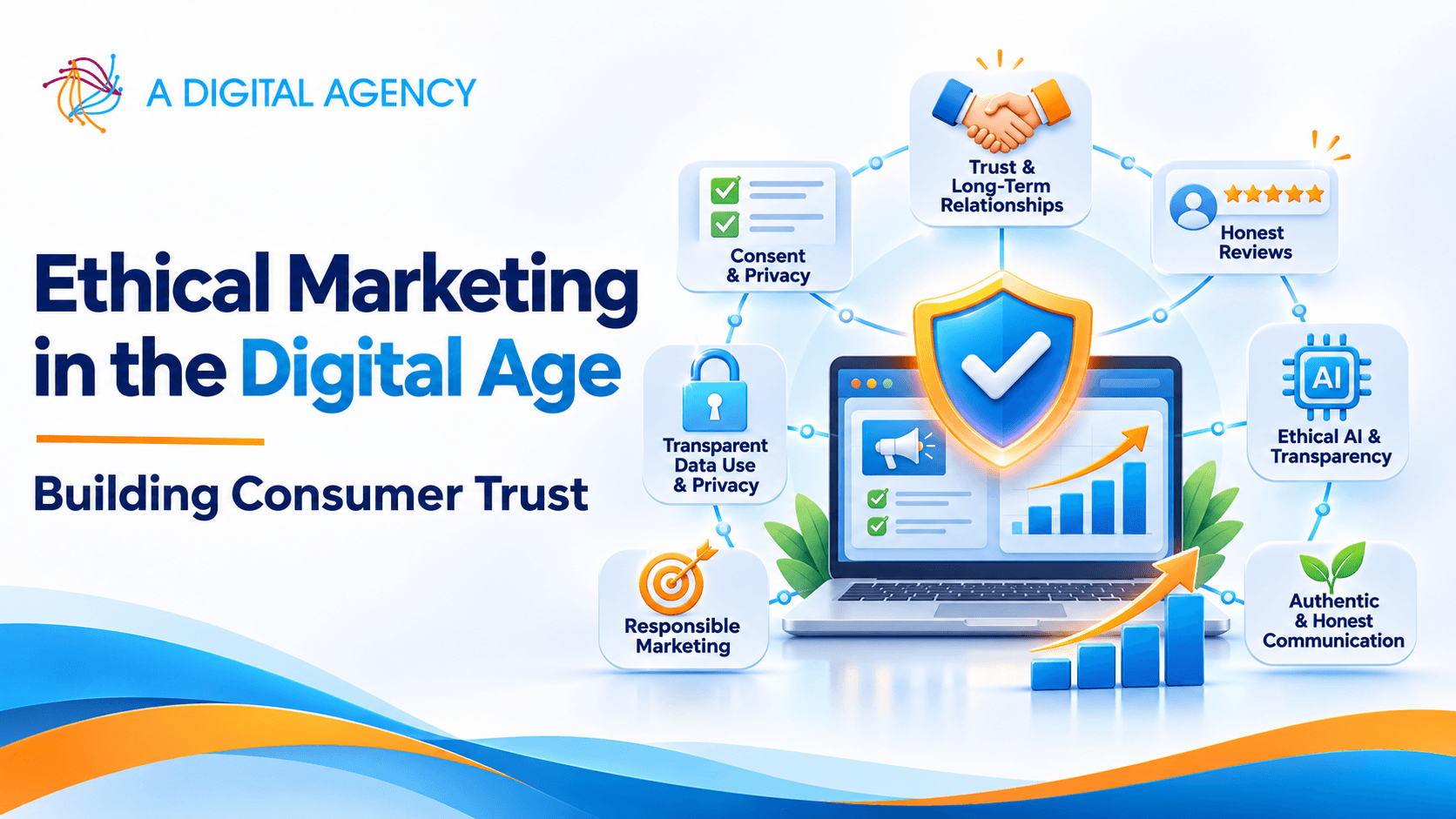
Ethical Marketing in the Digital Age: Building Consumer Trust
Discover ethical marketing strategies for 2026, including AI transparency, data privacy, honest advertising, and ways to build lasting consumer trust.
Digital marketing has entered a new era. Artificial intelligence creates advertising content, algorithms personalize customer experiences, and businesses collect information across multiple digital platforms. These innovations offer exciting opportunities, but they also raise important questions about privacy, honesty, and responsible communication.
In 2026, consumers expect more than attractive advertisements and competitive prices. They want brands to respect their information, communicate transparently, and demonstrate accountability.
This changing environment makes ethical marketing an essential component of sustainable business growth.
Organizations that prioritize honesty and customer interests can strengthen relationships, establish credibility, and differentiate themselves from competitors.
This guide explores the principles of ethical digital marketing, emerging challenges involving artificial intelligence and personal data, and practical strategies businesses can adopt to build lasting consumer trust.
What Is Ethical Marketing?
Ethical marketing involves promoting products and services through honest, responsible, fair, and transparent practices.
Rather than concentrating exclusively on generating sales, ethical marketers consider how their decisions affect customers, communities, and society.
An ethical marketing strategy prioritizes accurate communication, informed customer choices, responsible information management, and respect for different audiences.
For example, a company advertising environmentally friendly products should provide credible evidence supporting its sustainability claims.
Similarly, businesses using customer information for personalized advertising should clearly explain relevant data practices and provide appropriate privacy choices.
Ethical marketing does not mean avoiding persuasive advertising. It means communicating value without deception, exploitation, or unnecessary pressure.
Why Consumer Trust Matters More Than Ever in 2026
Consumer trust influences purchasing decisions, customer loyalty, recommendations, and long-term brand reputation.
Modern customers can research companies, compare experiences, and publicly discuss concerns within minutes.
Misleading advertisements, hidden subscription charges, and unauthorized data collection can quickly damage established relationships.
At the same time, customers increasingly encounter AI-generated images, virtual influencers, automated recommendations, and personalized promotional messages.
Distinguishing authentic information from manipulated content has therefore become an important consumer concern.
Businesses that provide reliable information, acknowledge limitations, and communicate consistently create stronger foundations for customer confidence.
Trust cannot be established through marketing statements alone. It develops when companies consistently deliver experiences that match their promises.
Major Ethical Marketing Challenges in 2026
1. Artificial Intelligence and Synthetic Content
Generative artificial intelligence has transformed how businesses produce advertisements, videos, images, and written content.
However, AI-generated material can create ethical problems when audiences mistake fictional representations for genuine customer experiences.
Synthetic testimonials, manipulated product demonstrations, and realistic virtual personalities may mislead consumers if presented without necessary context.
Businesses should establish clear policies for using artificial intelligence in promotional materials.
Human reviewers must verify product claims, evaluate potential bias, and ensure synthetic content does not misrepresent real experiences.
AI can improve marketing productivity, but businesses remain responsible for the messages they publish.
2. Data Privacy and Customer Consent
Personalization depends on information about customer behavior, preferences, and interactions.
Although relevant recommendations can improve customer experiences, excessive data collection may create discomfort and undermine trust.
Responsible businesses should collect only information necessary for legitimate purposes.
Privacy notices should clearly explain what information is collected, why it is needed, and how it may be shared.
Consent choices must follow applicable laws and should be understandable rather than intentionally confusing.
Customers should also have practical ways to manage preferences and exercise relevant privacy rights.
3. Misleading Reviews and Testimonials
Customer reviews influence purchasing decisions across online marketplaces, search platforms, and social networks.
Unfortunately, fabricated testimonials and undisclosed incentives can distort customer perceptions.
Businesses should never invent customer experiences or purchase reviews that falsely represent product quality.
Employees and influencers must disclose relevant relationships where required.
Genuine feedback, including reasonable criticism, helps potential customers develop realistic expectations.
Responding professionally to negative reviews can demonstrate accountability more effectively than attempting to hide every unfavorable experience.
4. Manipulative Advertising Techniques
Some digital experiences use deceptive interface designs to influence customer decisions.
Examples include hidden cancellation options, misleading countdown timers, confusing subscription agreements, and intentionally difficult privacy controls.
These practices are commonly associated with dark patterns.
Although manipulative techniques may increase immediate conversions, they can create dissatisfaction and damage customer relationships.
Ethical businesses should make important information easy to understand and provide straightforward purchasing and cancellation experiences.
Five Core Principles of Ethical Digital Marketing
Honesty and Accuracy
Every promotional claim should accurately describe the product or service being offered.
Avoid exaggerated results, unsupported guarantees, and misleading comparisons.
If an offer contains limitations, eligibility requirements, or additional charges, disclose them clearly.
Transparency and Accountability
Customers should understand when they are viewing advertisements, sponsored content, or relevant AI-generated material.
Businesses must also accept responsibility when mistakes occur.
Correcting inaccurate information promptly demonstrates commitment to responsible communication.
Respect for Customer Privacy
Privacy should be considered during campaign planning rather than treated as an afterthought.
Marketing teams should collaborate with technical and legal specialists to establish appropriate safeguards.
Fairness and Inclusivity
Marketing messages should respect different backgrounds, abilities, and experiences.
Inclusive communication considers accessibility, cultural context, and the possibility of unintended stereotyping.
Businesses should regularly review creative materials and targeting practices for potential exclusion.
Authenticity and Social Responsibility
Brands should support their public commitments through measurable actions.
Claims involving sustainability, charitable contributions, ethical sourcing, or community impact should be supported by appropriate evidence.
Authenticity requires consistency between promotional messaging and business operations.
AI Transparency: A Major Ethical Marketing Priority
Artificial intelligence is increasingly involved in content production, customer support, audience analysis, and advertising optimization.
In 2026, responsible AI marketing requires more than simply choosing efficient tools.
Businesses must evaluate how AI systems influence customer decisions and whether automated content creates misleading impressions.
The European Union's AI Act introduces transparency obligations for certain AI systems, including requirements concerning direct AI interactions and specified AI-generated or manipulated content.
Relevant Article 50 obligations began applying on August 2, 2026, with specific exceptions and transitional arrangements.
These requirements do not mean every AI-assisted marketing post must automatically carry the same disclosure.
The applicable rules depend on the system, content, context, and organization's role.
Beyond legal compliance, companies should explain AI involvement whenever failing to do so could materially mislead audiences.
For example, a fictional AI spokesperson should not be presented as an actual satisfied customer.
Transparent AI practices help businesses benefit from automation while preserving customer confidence.
Ethical Influencer Marketing and Brand Partnerships
Influencer marketing remains an important channel for reaching specific communities.
However, successful partnerships require transparency and genuine alignment between creators and brands.
Businesses should select influencers whose audiences and content are relevant to their products.
Creators must clearly disclose material brand relationships when required, including payments, gifts, and other benefits.
Influencers should also avoid making claims about products they have not personally experienced.
For US audiences, the Federal Trade Commission provides guidance concerning endorsements, sponsored relationships, and testimonial accuracy.
Businesses should establish written expectations, review promotional claims, and monitor published campaigns.
Authentic partnerships are more valuable than manufactured enthusiasm.
Responsible Personalization Without Invading Privacy
Personalized marketing can help audiences discover relevant products and receive useful recommendations.
However, personalization becomes problematic when customers feel excessively monitored or manipulated.
Businesses should establish boundaries around data collection and targeting.
First-party information collected through direct customer relationships can support relevant communication when handled appropriately.
Preference centers, clear subscription choices, and transparent explanations give customers greater control.
Marketing teams should also avoid using sensitive personal information in ways that create unfair or unexpected outcomes.
Responsible personalization balances commercial relevance with individual autonomy.
Sustainability, Green Claims, and Brand Responsibility
Environmental responsibility remains an important consideration for many consumers.
However, businesses must distinguish meaningful sustainability initiatives from promotional language unsupported by evidence.
Greenwashing occurs when marketing creates a misleading impression about environmental performance.
Examples include vague claims such as environmentally friendly without sufficient explanation or selective presentation of favorable information.
Companies should use specific descriptions, credible measurements, and appropriate supporting documentation.
Where environmental achievements are limited, businesses should communicate those limitations rather than suggesting complete sustainability.
Responsible marketing focuses on demonstrating progress through verifiable actions.
Building an Ethical Marketing Culture
Ethical behavior cannot depend entirely on individual campaign managers.
Organizations need internal policies that encourage responsible decisions across marketing, sales, customer service, and leadership.
Executives should establish clear expectations concerning advertising accuracy, customer privacy, and transparent communication.
Employee training can address AI usage, influencer disclosures, accessibility, and deceptive marketing practices.
Campaign review procedures help identify potential issues before publication.
Businesses should also create channels for employees and customers to report concerns.
When ethical problems arise, responsible organizations investigate, correct the issue, and communicate meaningful improvements.
How Ethical Content Marketing Strengthens Customer Relationships
High-quality content marketing provides information that helps audiences make informed decisions.
Educational blogs, product comparisons, tutorials, and customer guides can establish credibility without relying on exaggerated promises.
Businesses should distinguish factual information from promotional opinion.
Sources should be reliable, statistics should be current, and customer success stories should accurately reflect actual experiences.
AI-assisted content requires careful verification, particularly when discussing health, finances, legal matters, or technical information.
Original insights and practical guidance help brands develop trust through expertise.
The objective is to become a dependable information source rather than simply producing more content than competitors.
Measuring the Business Impact of Ethical Marketing
Ethical marketing should be evaluated through customer experiences as well as traditional campaign performance.
Businesses can monitor customer retention, complaint patterns, repeat purchases, subscription cancellations, and satisfaction feedback.
Brand sentiment and customer recommendations provide additional insights into audience confidence.
Marketing teams should also examine unsubscribe rates, advertising complaints, and privacy-related requests.
These indicators may reveal problems that conventional engagement metrics overlook.
For example, a campaign generating many clicks but significant customer complaints may not represent sustainable success.
Combining commercial and customer-experience measurements creates a more complete picture of marketing effectiveness.
Practical Steps to Create an Ethical Marketing Strategy
Businesses can strengthen responsible marketing through a structured improvement process.
First, review existing advertisements, website content, and promotional claims for accuracy.
Next, evaluate how customer information is collected, stored, and used.
Establish internal guidelines for AI-generated materials and influencer partnerships.
Simplify privacy explanations, subscription terms, and customer communication preferences.
Introduce review procedures for campaigns involving sensitive claims or potentially vulnerable audiences.
Finally, gather customer feedback and update practices when concerns emerge.
Ethical marketing is not a one-time certification. It requires consistent monitoring and improvement as technology, expectations, and regulations evolve.
The Future of Ethical Marketing Beyond 2026
Artificial intelligence, automated customer interactions, and increasingly sophisticated personalization will continue transforming digital marketing.
These technologies can improve efficiency, but they also introduce new questions about transparency, responsibility, and consumer autonomy.
Brands will need stronger processes for verifying automated content and assessing how marketing systems influence audiences.
Privacy-conscious communication and accessible digital experiences will remain important components of trustworthy marketing.
Businesses that invest in responsible innovation can differentiate themselves through reliability rather than relying exclusively on aggressive promotional tactics.
The strongest long-term strategies will combine technological capabilities with human judgment and clear ethical standards.
Conclusion
Ethical marketing in 2026 is about creating meaningful customer relationships through honesty, transparency, fairness, and responsible technology.
As artificial intelligence and data-driven advertising become more influential, businesses must consider how their marketing decisions affect consumer confidence.
Truthful advertising, appropriate privacy protections, authentic partnerships, and accountable communication are essential elements of responsible digital marketing.
Organizations should measure success not only through conversions and revenue but also through customer satisfaction and long-term trust.
By placing customers at the center of marketing decisions, brands can build stronger reputations, encourage loyalty, and establish sustainable competitive advantages.
Ultimately, ethical marketing is not simply about avoiding harmful practices. It is about building a business that customers can confidently choose, recommend, and trust.
More in Marketing Strategy
 Marketing Strategy
June 28, 2026
Marketing Trends for Second Half of 2024
Explore key marketing trends for the second half of 2024, including AI, personalization, short-form content, and data-driven strategies for growth.
 Marketing Strategy
June 28, 2026
10 Key Strategies for Marketing Your Business Online
Discover 10 proven online marketing strategies to grow your business, increase brand visibility, attract customers, and boost conversions effectively.
 Marketing Strategy
June 28, 2026
7 Powerful Marketing Strategies to Try in 2022
Discover seven powerful marketing strategies to boost brand awareness, attract customers, increase engagement, and drive business growth effectively.