

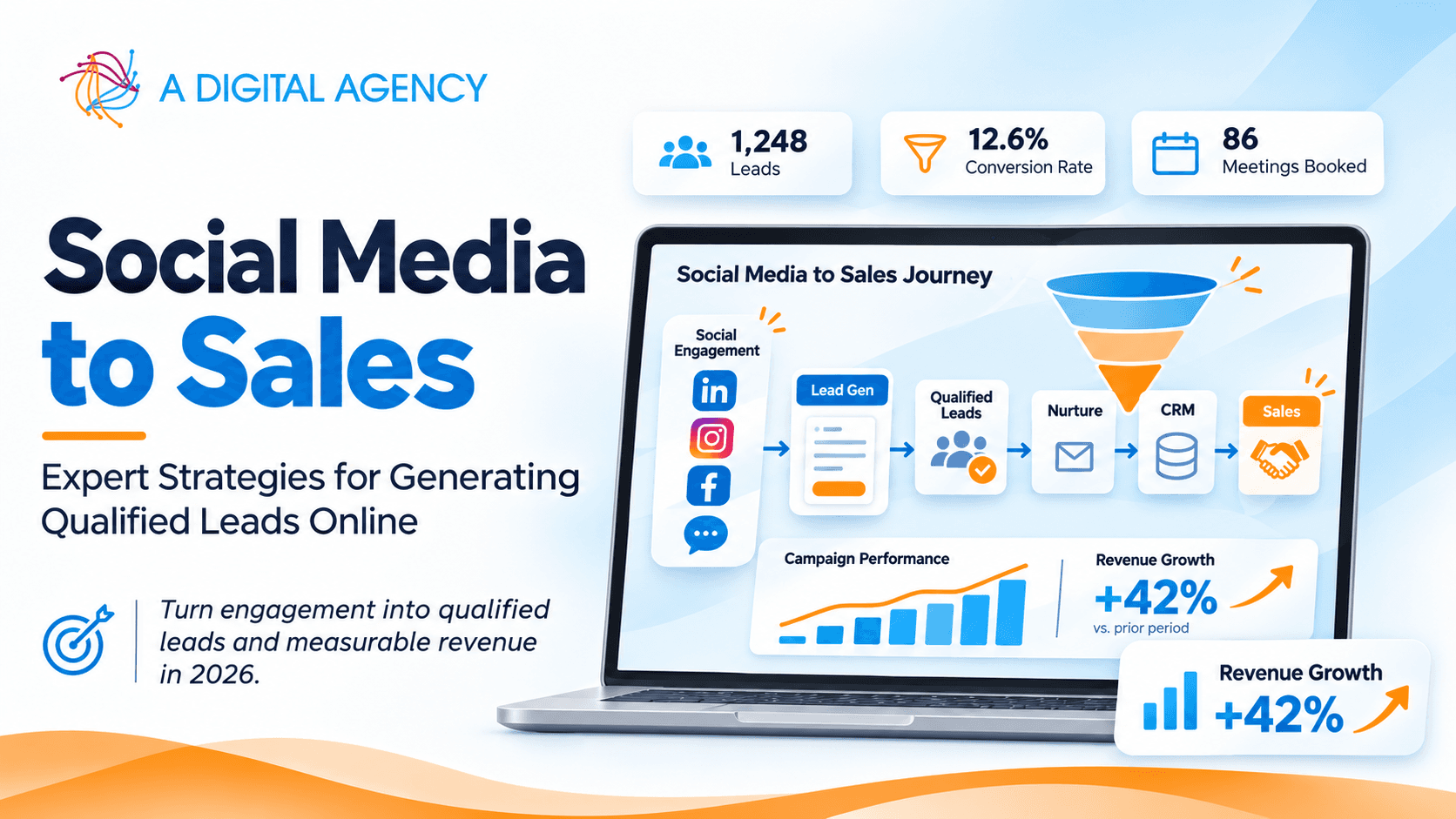
Social Media to Sales: Expert Strategies for Generating Qualified Leads Online
Discover social media lead generation strategies for 2026. Learn how to attract qualified prospects, nurture leads, and turn engagement into sales.
Social media marketing has evolved far beyond building followers and collecting likes. In 2026, businesses increasingly use social platforms to discover potential customers, establish credibility, generate qualified leads, and create measurable sales opportunities.
However, having thousands of followers does not automatically translate into revenue. Businesses must understand their audiences, develop valuable content, and build structured systems that turn online engagement into meaningful customer relationships.
Artificial intelligence, personalized advertising, short-form video, and automated lead nurturing are transforming how brands connect with prospective customers.
Platforms such as Facebook, Instagram, LinkedIn, TikTok, and YouTube provide opportunities to reach specific audiences throughout their purchasing journeys.
The challenge is identifying which interactions indicate genuine interest and converting that interest into business results.
This guide explores effective social media lead generation strategies for 2026, including audience targeting, paid advertising, content marketing, AI automation, lead qualification, and conversion optimization.
What Is Social Media Lead Generation?
Social media lead generation is the process of attracting potential customers through social platforms and encouraging them to express interest in a product or service.
A lead might submit a contact form, request a consultation, register for a webinar, download a resource, or begin a business conversation.
However, not every lead has the same potential value.
A qualified lead is someone whose needs, interests, and purchasing circumstances suggest a reasonable fit with a business's offerings.
For example, a software company might receive hundreds of inquiries from social advertisements.
Only a portion may represent organizations with suitable budgets, genuine requirements, and decision-making authority.
Successful lead generation focuses on attracting relevant prospects rather than simply collecting contact information.
Why Social Media Lead Generation Matters in 2026
Modern customers frequently research businesses through social platforms before making purchasing decisions.
They examine reviews, watch product demonstrations, compare alternatives, and evaluate customer experiences.
This behavior creates opportunities for companies to reach prospects earlier in the buying process.
Increased Brand Visibility
Social media allows businesses to introduce their products and services to audiences beyond existing customers.
Useful content and targeted advertising can improve brand discovery among relevant groups.
Direct Customer Communication
Comments, messages, and interactive content create opportunities for businesses to answer questions and understand customer needs.
These conversations can develop trust before a formal sales discussion begins.
More Precise Audience Targeting
Advertising platforms provide tools for reaching audiences according to relevant characteristics and available targeting options.
Businesses can also use appropriately collected first-party information to support campaign optimization.
Measurable Business Outcomes
Social platforms offer campaign reporting and conversion measurement capabilities.
When connected with customer relationship management systems, these insights help businesses evaluate lead quality and sales performance.
Step 1: Identify Your Ideal Customer Profile
Generating qualified leads begins with understanding which customers are most likely to benefit from your offerings.
A clearly defined ideal customer profile helps businesses select appropriate platforms, develop relevant messages, and avoid wasting advertising budgets.
Important considerations include industry, location, company size, customer needs, purchasing behavior, and available budget.
For B2B companies, decision-maker responsibilities and organizational challenges are especially important.
For example, a digital marketing agency may target growing service businesses that need stronger online visibility and more consistent customer inquiries.
Rather than promoting every available service, the agency can focus on the specific problems those businesses experience.
Understanding customer needs provides the foundation for effective social media marketing strategies.
Step 2: Choose the Right Social Media Platforms
Different platforms attract different audiences and support different types of engagement.
Businesses should select channels according to customer behavior and marketing objectives rather than attempting to maintain a presence everywhere.
LinkedIn for B2B Lead Generation
LinkedIn is particularly useful for reaching professionals, executives, and organizational decision-makers.
Businesses can publish thought leadership content, participate in industry discussions, and promote relevant professional resources.
LinkedIn Lead Gen Forms also allow advertisers to collect information through forms that can use prefilled member profile details.
Facebook and Instagram for Customer Discovery
Facebook and Instagram offer opportunities for community engagement, visual storytelling, and targeted advertising.
Businesses can showcase products, customer experiences, educational content, and promotional offers.
Meta's lead advertising tools support instant forms and other conversion experiences.
TikTok and YouTube for Educational Video
Short-form video can help businesses demonstrate expertise, explain products, and reach interested audiences.
Tutorials, demonstrations, and useful explanations can introduce potential customers to a brand.
The strongest platform strategy focuses on where qualified customers are active, not where content receives the most views.
Step 3: Optimize Social Media Profiles for Conversions
A social media profile often serves as a customer's first introduction to a business.
An incomplete or confusing profile can discourage potential inquiries.
Businesses should use recognizable branding, clear descriptions, relevant keywords, and accurate contact information.
Profile descriptions should explain what the company offers and which customer problems it solves.
A visible call to action can guide visitors toward booking consultations, requesting demonstrations, or exploring service information.
Links should direct users to relevant landing pages rather than automatically sending every visitor to a generic homepage.
Pinned posts, featured content, and customer testimonials can further communicate credibility.
Profile optimization helps transform casual visitors into more informed potential customers.
Step 4: Create Content That Attracts Qualified Prospects
Effective social media content should address the questions and challenges customers experience.
Instead of publishing promotional messages exclusively, businesses should create content that educates, demonstrates value, and supports informed decisions.
Educational Content
Practical tutorials, industry insights, and explanatory posts help establish expertise.
For example, a financial consulting firm might share general business budgeting guidance.
Customer Success Stories
Authentic case studies demonstrate how products or services have helped customers address real challenges.
Whenever possible, include verified outcomes and appropriate customer permissions.
Short-Form Video
Short videos can explain complex concepts quickly and introduce audiences to business solutions.
Strong introductions, clear messaging, and useful demonstrations help maintain attention.
Interactive Content
Polls, questions, and live discussions encourage audience participation.
These interactions also provide insights into customer interests.
A balanced content strategy combines useful information with clear opportunities for interested prospects to take the next step.
Step 5: Build a Social Media Sales Funnel
A structured sales funnel connects social media activity with customer acquisition.
The funnel should reflect different stages of customer readiness.
Awareness Stage
At this stage, audiences are discovering a problem or exploring general information.
Educational videos, informative articles, and industry insights help establish visibility.
Consideration Stage
Prospects begin evaluating possible solutions.
Comparison guides, testimonials, demonstrations, and case studies help answer important questions.
Conversion Stage
Interested users may be ready to request pricing, book a consultation, register for a trial, or purchase.
Clear offers and relevant landing pages reduce unnecessary friction.
Retention Stage
Existing customers can receive educational updates, support resources, and personalized communications.
A strong sales funnel ensures that content and calls to action reflect audience readiness rather than attempting to force immediate purchases.
Step 6: Use Paid Social Advertising Strategically
Organic social media marketing can develop awareness and relationships, while paid campaigns provide additional opportunities to reach relevant audiences.
However, paid advertising should be optimized for lead quality rather than submission volume alone.
Meta Lead Ads
Facebook and Instagram lead campaigns can collect contact information through instant forms.
Meta provides form options designed for different objectives, including higher-volume submissions and additional review steps for higher-intent prospects.
Businesses should test which approach produces more qualified inquiries.
LinkedIn Lead Generation Campaigns
LinkedIn advertising can be useful for businesses targeting professional audiences.
Advertisers can promote educational resources, webinars, consultations, and relevant business solutions.
Lead Gen Forms can reduce submission friction while supporting campaign tracking and CRM integrations.
Retargeting Campaigns
Retargeting allows eligible advertisers to reconnect with audiences who previously interacted with content or websites.
Campaigns should provide relevant follow-up messages while respecting privacy requirements and advertising platform policies.
Successful advertising combines appropriate targeting, compelling offers, reliable measurement, and effective follow-up.
Step 7: Offer Valuable Lead Magnets
Lead magnets encourage interested users to exchange contact information for something useful.
The strongest lead magnets address specific customer challenges.
Examples include downloadable checklists, educational guides, consultation offers, webinars, templates, and product demonstrations.
A digital agency might offer a website conversion checklist to businesses seeking more customer inquiries.
A software company could provide a practical implementation guide for prospective users.
Businesses should avoid collecting unnecessary personal information.
Lead magnets should also accurately communicate what users will receive and how their information will be used.
Providing immediate value can create a positive first interaction while identifying prospects interested in further communication.
Step 8: Use AI and Automation for Lead Nurturing
Artificial intelligence and marketing automation are increasingly important components of lead generation in 2026.
AI-assisted tools can help summarize inquiries, organize lead information, draft follow-up messages, and identify patterns in customer interactions.
Chatbots can answer common questions and direct customers toward relevant resources.
CRM automation can assign leads to sales representatives and record important interactions.
However, automated responses should not misrepresent capabilities or make unsupported promises.
Businesses should provide human assistance when conversations become complex or sensitive.
Personalization should rely on appropriate, accurate information rather than intrusive assumptions.
The objective is to improve customer experiences while reducing repetitive administrative work.
Step 9: Qualify Leads Before Sending Them to Sales
Not every person who downloads a guide or submits a form is ready to purchase.
Lead qualification helps businesses prioritize prospects with genuine commercial potential.
Common qualification considerations include customer needs, budget compatibility, purchasing timeline, and decision-making authority.
A company might assign higher priority to prospects requesting demonstrations than users downloading general educational resources.
However, scoring systems should remain flexible.
Early-stage prospects may develop into valuable customers over time.
Businesses can use CRM information and appropriately collected behavioral data to guide follow-up activities.
Effective qualification helps sales teams focus on meaningful conversations while maintaining relationships with prospects who are not immediately ready to buy.
Step 10: Turn Social Engagement Into Sales Conversations
Generating a lead is only the beginning.
Businesses must provide timely, relevant follow-up to help interested prospects move toward purchasing decisions.
Sales conversations should begin by understanding the customer's requirements.
Instead of immediately delivering a long promotional pitch, representatives can ask useful questions and recommend appropriate next steps.
For example, a prospect interested in website redesign may benefit from a short discussion about current performance challenges and project objectives.
Clear communication, realistic expectations, and professional follow-up help establish confidence.
Businesses should also respect contact preferences and promptly honor unsubscribe or opt-out requests.
A thoughtful sales experience can differentiate a brand from competitors relying on aggressive outreach.
Step 11: Use Social Proof to Build Trust
Customer confidence plays a significant role in converting social media leads.
Authentic reviews, testimonials, case studies, and customer-generated content can provide evidence of business credibility.
Businesses should feature real customer experiences and avoid fabricated endorsements.
When sharing performance results, explain relevant context and avoid implying that every customer will achieve identical outcomes.
Influencer partnerships should disclose material commercial relationships where required.
Social proof works best when it demonstrates genuine value rather than attempting to manufacture popularity.
Positive customer experiences can also encourage referrals and recommendations, creating additional opportunities for qualified lead generation.
Step 12: Track Metrics That Reflect Real Business Growth
Follower counts and engagement rates provide useful information, but they do not fully measure marketing success.
Businesses should track indicators connecting social media activity with sales outcomes.
Cost Per Lead
Cost per lead measures advertising or campaign expenditure relative to the number of leads generated.
Cost Per Qualified Lead
This metric evaluates the expense of attracting prospects who meet defined qualification requirements.
Lead-to-Customer Conversion Rate
This shows how effectively leads become paying customers.
Customer Acquisition Cost
Customer acquisition cost measures the broader expenses associated with acquiring new customers.
Revenue and Return on Investment
These measurements help determine whether social media campaigns contribute profitable business outcomes.
Marketing teams should also monitor lead response times, meeting attendance, and customer retention.
Evaluating the complete customer journey helps identify opportunities for improvement.
Common Social Media Lead Generation Mistakes
Businesses sometimes prioritize follower growth without considering whether their audience matches their target customers.
Other common mistakes include publishing inconsistent content, using generic advertisements, and offering unclear calls to action.
Poorly designed landing pages can also reduce conversion opportunities.
Another challenge is collecting leads without developing an effective follow-up process.
AI-generated messages may create additional problems when personalization is inaccurate or repetitive.
Businesses should avoid measuring campaign success exclusively through inexpensive leads.
A smaller number of qualified prospects can generate greater business value than a large database of uninterested contacts.
Future Trends in Social Media Lead Generation
Social media lead generation will continue evolving as artificial intelligence, customer behavior, and advertising technology develop.
AI-assisted audience analysis and automated campaign optimization may help marketers identify more relevant opportunities.
Short-form educational videos and social search will remain important discovery channels.
Businesses will also need to prioritize first-party customer information, privacy-conscious personalization, and transparent communication.
CRM integrations and conversion measurement will become increasingly valuable for connecting social engagement with actual sales performance.
However, technology alone cannot replace trust.
Brands that consistently provide useful content, authentic experiences, and responsive customer service will be better positioned to develop lasting customer relationships.
Conclusion
Generating qualified leads through social media in 2026 requires more than attractive posts and high engagement numbers.
Businesses need a structured strategy that combines audience understanding, relevant content, optimized profiles, targeted advertising, and consistent lead nurturing.
Artificial intelligence and automation can improve efficiency, but successful lead generation still depends on genuine customer relationships and reliable information.
By measuring lead quality, improving sales processes, and focusing on meaningful business outcomes, organizations can turn social media into a sustainable customer acquisition channel.
The most effective social media strategy is not about attracting everyone. It is about reaching the right people, delivering value, and helping interested prospects become loyal customers.
More in Social Media Marketing
 Social Media Marketing
June 28, 2026
How to Increase Your Business Reach with Social Media Marketing
Expand your business reach with social media marketing using proven strategies to grow your audience, boost engagement, and drive more conversions.
 Social Media Marketing
June 28, 2026
The Top 10 Reasons Your Business Should Be In Social Media
Discover the top 10 reasons your business should use social media to increase brand awareness, engage customers, generate leads, and drive growth.
 Social Media Marketing
June 28, 2026
Instagram Fundamental Changes You Need to Know in 2022
Discover the key Instagram changes you need to know, including algorithm updates, new features, and strategies to boost reach and engagement.