

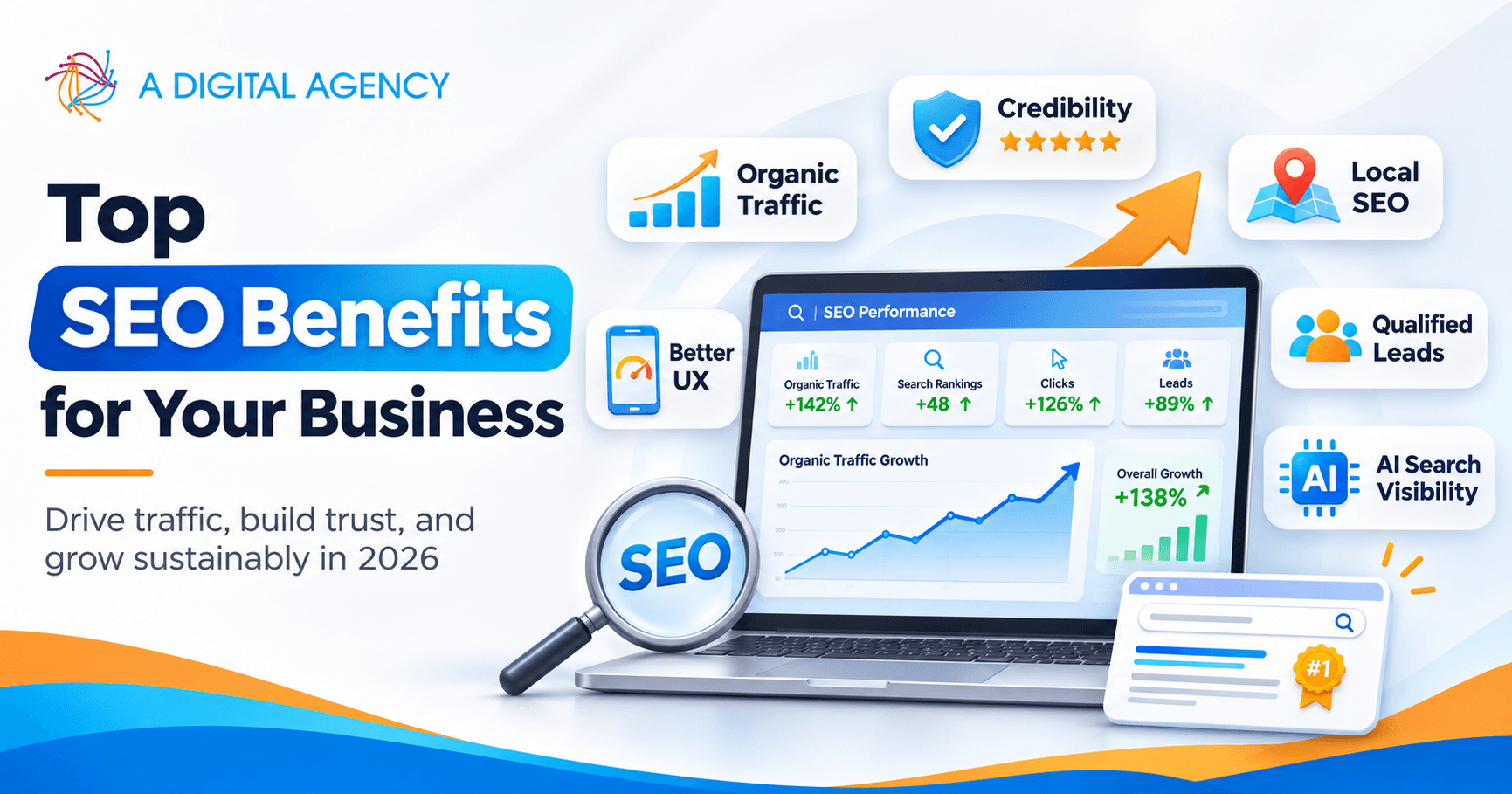
Top SEO Benefits for Your Business
Discover the top SEO benefits for businesses in 2026, from organic traffic and local visibility to AI search, credibility, leads, and sustainable growth.
Search engine optimization has become an essential part of building a successful online business. Whether customers are searching for nearby services, comparing products, or exploring solutions through artificial intelligence, visibility in search experiences can influence which brands they discover and trust.
In 2026, SEO involves much more than adding keywords to website pages. Search engines increasingly emphasize useful information, technical accessibility, content relevance, and satisfying user experiences.
Businesses must also adapt to evolving search behavior, including AI-powered search features, conversational queries, and visual discovery.
For small businesses, SEO provides opportunities to compete for relevant searches without depending entirely on paid advertising. For established organizations, it supports brand authority, customer acquisition, and sustainable digital growth.
Understanding the benefits of SEO helps businesses make informed marketing investments and develop strategies that deliver value beyond search rankings.
This guide explores 14 important SEO benefits for businesses in 2026 and explains how search optimization contributes to visibility, customer engagement, and long-term success.
1. SEO Increases Organic Website Traffic
One of the most important benefits of SEO is attracting visitors through unpaid search results.
When potential customers search for relevant products, services, or information, optimized website pages have a better opportunity to appear in search results.
However, attracting traffic requires more than targeting popular keywords.
Businesses should identify search terms that reflect customer needs and create content that answers those searches effectively.
For example, a landscaping company might develop pages targeting searches related to garden maintenance, lawn care services, and seasonal landscaping requirements.
Long-tail keywords can be particularly useful because they frequently describe specific customer intentions.
A search such as "affordable garden maintenance services for small homes" provides clearer context than a broad search for "gardening."
By understanding search intent, businesses can attract visitors who are genuinely interested in their offerings.
2. SEO Offers Cost-Effective Long-Term Marketing
Search engine optimization can reduce reliance on continuous advertising expenditure.
Unlike paid advertising, organic search traffic does not require payment for every click.
However, SEO is not completely free. Businesses must invest in content development, technical improvements, research, and ongoing website maintenance.
The financial advantage comes from creating useful digital assets that may continue attracting visitors over time.
An informative article or well-optimized service page can generate relevant traffic beyond its original publication date.
This makes SEO attractive for businesses seeking sustainable growth without increasing advertising budgets proportionally.
Actual return on investment depends on industry competition, implementation costs, customer value, and conversion performance.
SEO should therefore be treated as a measurable business investment rather than a guaranteed source of inexpensive leads.
3. SEO Strengthens Brand Credibility and Trust
Customers often research businesses before making purchasing decisions.
A professional website containing accurate information, helpful resources, and clear contact details can improve confidence.
SEO encourages businesses to develop content that demonstrates genuine experience and subject knowledge.
Google's content guidance emphasizes helpful, reliable information created primarily for people.
Its E-E-A-T framework refers to experience, expertise, authoritativeness, and trustworthiness.
Although E-E-A-T is not itself a single ranking factor, these qualities help businesses evaluate content credibility.
For example, a financial consulting company can strengthen trust by publishing accurate educational material reviewed by qualified professionals.
Transparent authorship, credible references, and regularly maintained information reinforce this credibility.
High search visibility may introduce a brand to customers, but earning their trust requires consistently delivering reliable experiences.
4. SEO Improves Website User Experience
Modern SEO and website usability are closely connected.
A website that is difficult to navigate, slow to load, or poorly organized can frustrate visitors.
Technical optimization helps businesses identify and address these problems.
Important improvements include responsive design, accessible navigation, descriptive headings, efficient image delivery, and logical internal linking.
Google's Core Web Vitals provide measurements related to loading performance, responsiveness, and visual stability.
These metrics help website owners understand important aspects of the page experience.
However, good performance scores do not automatically guarantee higher search rankings.
Businesses should prioritize the complete user experience, including content usefulness and ease of navigation.
A better website experience can help visitors find information, explore services, and complete desired actions with fewer obstacles.
5. Local SEO Connects Businesses With Nearby Customers
Local SEO is particularly valuable for businesses serving specific cities, neighborhoods, or service areas.
Customers frequently use Google Search and Maps to find nearby restaurants, healthcare providers, repair services, and professional businesses.
Optimizing local search visibility helps companies connect with people seeking relevant services in their area.
An important starting point is maintaining an accurate Google Business Profile.
Businesses should provide updated contact information, operating hours, categories, photographs, and service details.
Google identifies relevance, distance, and prominence as major considerations in local search rankings.
Customer reviews can also influence perceptions and contribute to local visibility.
For example, a dental clinic serving a particular city can improve its online discoverability by maintaining a complete business profile and publishing useful location-specific information.
Strong local SEO supports both online inquiries and opportunities for in-person visits.
6. SEO Helps Generate More Qualified Leads
Increased website traffic is valuable, but attracting relevant visitors is more important than simply increasing visitor counts.
Effective SEO connects website pages with specific customer needs and purchasing intentions.
Someone searching for "how to choose accounting software" may be researching options.
A person searching for "accounting software pricing for small businesses" may be closer to making a purchase.
Businesses should create content that supports different stages of the customer journey.
Educational articles can build awareness, comparison guides can support evaluation, and service pages can encourage inquiries.
Clear calls to action help visitors understand the next step.
When content and search intent align, SEO can produce opportunities for qualified lead generation and customer acquisition.
7. SEO Creates Competitive Advantages
Search engine optimization offers businesses opportunities to compete in markets dominated by larger organizations.
Companies with substantial advertising budgets may have greater promotional resources, but smaller businesses can focus on specialized customer needs.
A niche service provider may develop detailed, useful content that addresses topics larger competitors overlook.
For example, a small fitness studio could create resources specifically addressing beginner-friendly strength training for older adults.
This focused approach helps establish relevance within a particular audience.
Competitor research can identify content gaps, unanswered customer questions, and opportunities for clearer service information.
However, SEO success is not guaranteed simply because a keyword has limited competition.
Businesses must still demonstrate value, maintain technical quality, and build credibility.
A differentiated content strategy can help smaller brands compete through expertise rather than advertising expenditure alone.
8. SEO Supports Sustainable, Long-Term Growth
An important advantage of SEO is the opportunity to create content that remains useful over extended periods.
Evergreen resources, detailed tutorials, and informative service pages can continue supporting customer discovery after publication.
However, organic visibility is not permanent.
Search algorithms evolve, competitors improve their websites, and customer interests change.
Businesses should regularly review existing pages for accuracy, relevance, and performance.
Updating outdated information, improving explanations, and adding genuinely useful insights can maintain content quality.
For example, a software company may need to revise tutorials when application interfaces or features change.
Sustainable SEO requires consistent maintenance rather than publishing content once and expecting indefinite results.
The objective is to build a dependable collection of relevant website resources that supports continuing business growth.
9. SEO Provides Valuable Customer Insights
SEO tools offer information about how people discover and interact with a website.
Google Search Console helps businesses review search impressions, clicks, search queries, and indexing information.
Google Analytics provides additional insights into website activity and configured conversion events.
These tools can reveal which subjects attract attention and which pages contribute to meaningful business outcomes.
For example, a marketing agency may discover that visitors frequently search for guidance about website redesign costs.
This information could support new educational articles, service descriptions, or advertising campaigns.
Businesses should evaluate performance trends rather than drawing conclusions from isolated metrics.
Useful indicators include organic traffic, qualified inquiries, conversions, and revenue influenced by search.
SEO analytics can guide both website improvements and broader business decisions.
10. SEO Strengthens Other Digital Marketing Channels
Search engine optimization works effectively alongside content marketing, paid advertising, email communication, and social media.
Keyword research can reveal customer interests that inform marketing campaigns across multiple channels.
For example, a business may identify a popular search topic and develop a related blog article, educational video, and email newsletter.
SEO and Google Ads can also support different stages of the customer journey.
Organic content may introduce audiences to business solutions, while paid advertisements can provide additional visibility for relevant commercial searches.
Successful integration requires consistent messaging and appropriate landing pages.
Businesses should avoid assuming that advertising directly improves organic rankings.
Instead, paid and organic search should be coordinated around shared business objectives.
An integrated marketing approach can improve resource allocation and create more consistent customer experiences.
11. SEO Increases Brand Awareness and Recognition
Search visibility helps potential customers become familiar with a business.
When a brand consistently appears for relevant questions, product categories, and service searches, users have more opportunities to discover its offerings.
Visibility across informational and commercial searches can support recognition throughout the buying journey.
For example, a cybersecurity company might publish practical security guides alongside detailed service information.
Prospective clients could encounter the company while researching security problems before considering professional assistance.
Clear branding, consistent messaging, and helpful content make these interactions more meaningful.
Brand awareness should not be measured exclusively through search impressions.
Businesses can also review branded search trends, direct traffic, inquiries, and customer feedback.
A recognizable online presence is most valuable when it is supported by genuine expertise and dependable service.
12. SEO Helps Businesses Adapt to AI-Powered Search
Artificial intelligence is changing how people discover information online.
Google's AI Overviews and AI Mode introduce additional ways for users to explore questions and find relevant websites.
These experiences can summarize information and provide links that help users investigate subjects further.
In 2026, businesses should ensure their websites contain useful, accessible, and clearly organized information.
Google states that its existing SEO best practices remain relevant for participation in AI-powered search features.
There is no special technical markup required solely to appear in AI Overviews or AI Mode.
Businesses should focus on original insights, descriptive content, crawlable pages, and accurate information.
For example, a manufacturing company might publish detailed explanations of materials, processes, applications, and common customer questions.
Such content can support traditional search discovery while providing useful information for emerging AI-assisted search experiences.
AI visibility should be approached as an extension of strong SEO practices rather than a replacement for them.
13. SEO Supports Content Discoverability Across Platforms
SEO can also strengthen the usefulness of content shared through other digital channels.
An informative article optimized for relevant search queries may provide a valuable destination for social media posts, newsletters, and industry discussions.
Similarly, descriptive video titles, accessible transcripts, and meaningful image descriptions improve content accessibility and discoverability.
Businesses can repurpose useful website resources into educational videos, infographics, and professional social content.
For example, a home improvement company could publish a comprehensive renovation guide and share shorter tips through social platforms.
These activities reinforce consistent messaging across different customer touchpoints.
Social media engagement is not a direct substitute for search engine optimization, and social shares do not automatically increase Google rankings.
However, coordinated content distribution can help more people discover useful resources and become familiar with a brand.
14. SEO Helps Future-Proof Your Digital Presence
Consumer search behavior, technology, and online competition will continue evolving.
Businesses that invest in SEO build an adaptable foundation for digital visibility.
This foundation includes clear website architecture, relevant content, technical accessibility, and consistent brand information.
Emerging search experiences, including visual discovery and conversational AI, create additional reasons to maintain accurate and well-structured content.
However, future-proofing does not mean predicting every algorithm change.
Businesses should instead focus on practices that remain valuable regardless of individual platform updates.
These include answering real customer questions, maintaining trustworthy information, improving usability, and monitoring results.
An adaptable SEO strategy helps organizations respond to changing customer expectations without rebuilding their entire digital presence around every new trend.
How to Maximize SEO Benefits in 2026
Understanding SEO benefits is only the beginning. Businesses also need a practical implementation strategy.
Start by reviewing website performance, technical accessibility, and existing search visibility.
Identify important customer questions and research relevant keywords according to search intent.
Create useful content that addresses those questions with original information and accurate explanations.
Ensure important pages are accessible to search engines and connected through clear internal links.
For businesses serving local customers, maintain complete and accurate business information.
Measure organic traffic, qualified leads, conversions, and other indicators related to business objectives.
Finally, review performance regularly and improve content when customer needs or information change.
SEO works best as a continuous business process supported by research, technical improvements, and meaningful content development.
Conclusion: Why SEO Matters for Business Success in 2026
Search engine optimization remains an important investment for businesses seeking stronger digital visibility and sustainable growth.
Its benefits extend beyond improving rankings to include attracting relevant traffic, strengthening credibility, improving website experiences, and generating qualified business opportunities.
In 2026, AI-powered search experiences and changing customer behavior make adaptable SEO strategies especially important.
Businesses that prioritize helpful content, technical accessibility, local relevance, and reliable measurement are better positioned to compete online.
SEO does not guarantee immediate results or permanent search visibility. However, consistent investment can create valuable digital assets that support long-term marketing objectives.
Whether operating a small local company or an established enterprise, understanding and implementing SEO effectively can help turn online discovery into meaningful customer relationships and measurable business growth.
More in SEO Conversations
 SEO Conversations
June 28, 2026
Increase Your Business Customer Base with Local SEO Strategies 2024
Grow your customer base with local SEO strategies in 2024 to improve visibility, attract nearby customers, and boost business growth online.
 SEO Conversations
June 28, 2026
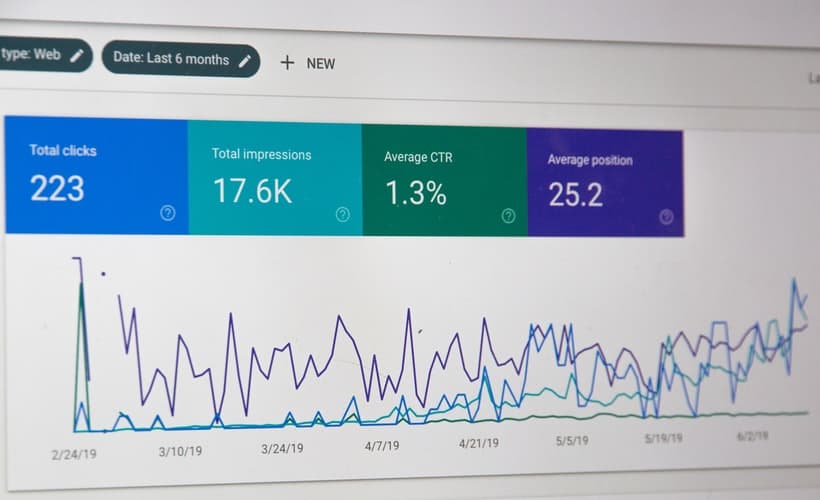
Importance of Google Search Console
Discover the importance of Google Search Console for monitoring website performance, fixing SEO issues, improving rankings, and increasing organic traffic.
 SEO Conversations
June 28, 2026
SEO Automation (2022): What You Need to Know Now
Learn how SEO automation streamlines keyword research, technical audits, content optimization, and reporting to improve rankings and save time.