

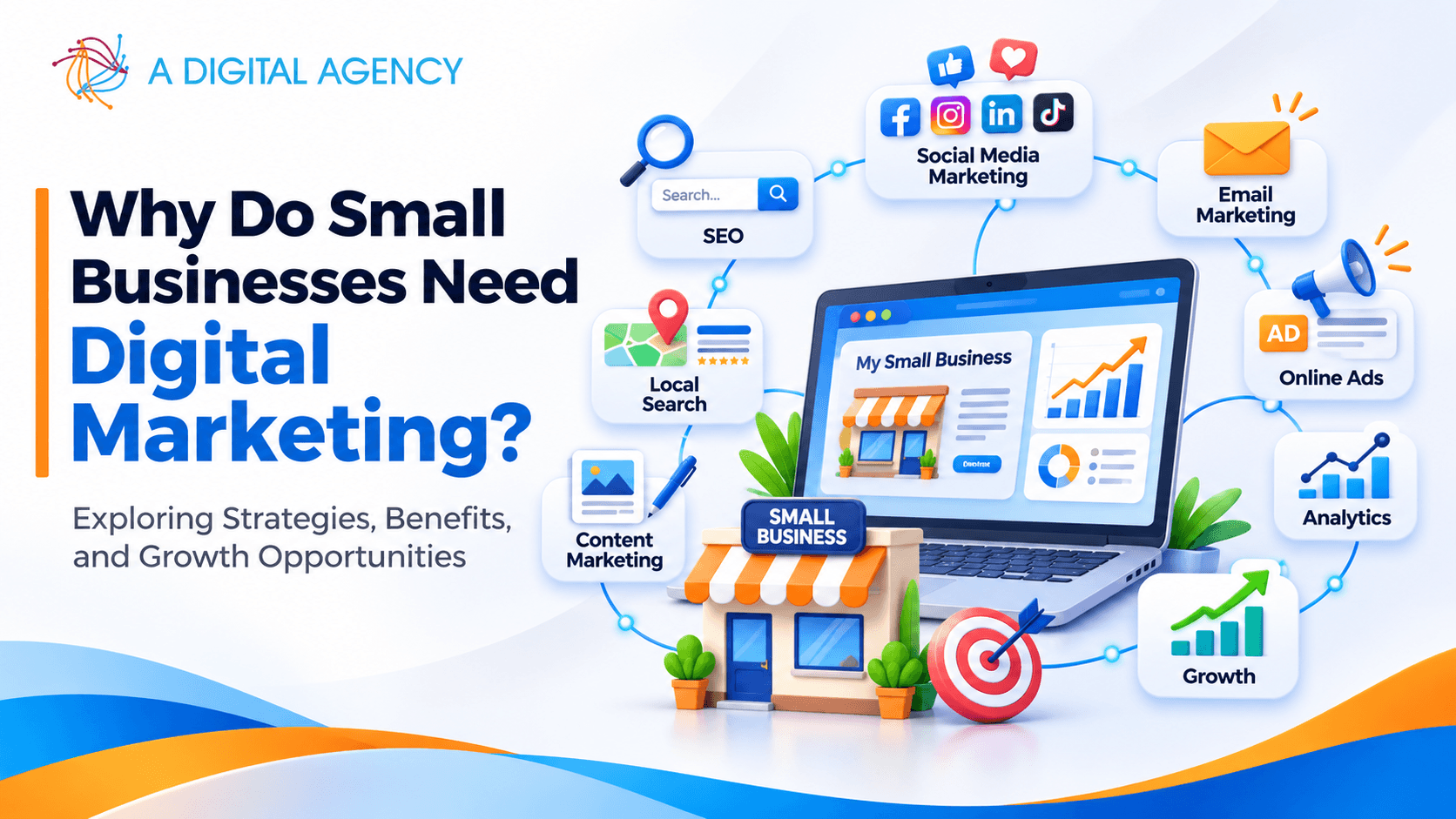
Why Do Small Businesses Need Digital Marketing? Exploring Strategies, Benefits, and Growth Opportunities
Discover why small businesses need digital marketing, including SEO, social media, email campaigns, and proven strategies to attract customers and grow.
Running a small business requires more than offering excellent products or services. Customers must discover your business, understand its value, and trust it enough to make a purchase. In an increasingly connected marketplace, digital marketing helps businesses achieve these objectives without depending entirely on expensive traditional advertising.
Consumers regularly research products, compare businesses, read reviews, and explore social media before making purchasing decisions. Businesses without a strong online presence risk losing valuable opportunities to competitors who are easier to find.
Digital marketing for small businesses provides practical ways to attract customers, develop relationships, and generate sustainable revenue. Whether operating a neighborhood restaurant, retail store, professional consultancy, or online business, the right marketing approach can create meaningful growth opportunities.
This guide explains why digital marketing matters, which strategies deliver value, and how small businesses can build an effective online presence.
What Is Digital Marketing for Small Businesses?
Digital marketing refers to promoting products, services, and brands through online channels, including search engines, websites, social media, email, and digital advertisements.
Unlike traditional advertising, digital campaigns can target specific audiences and provide measurable information about marketing performance.
For example, a local bakery can attract nearby customers through Google Search, showcase products on Instagram, and encourage repeat purchases through email offers.
Similarly, a consulting company can publish educational articles, establish professional credibility on LinkedIn, and generate inquiries through its website.
The objective is not simply increasing online visibility. Effective digital marketing connects businesses with relevant customers and turns attention into meaningful commercial opportunities.
Why Digital Marketing Is Essential for Small Businesses
Small businesses frequently operate with limited budgets, smaller teams, and strong competition. Digital marketing offers flexible opportunities to overcome these challenges.
1. Increase Brand Awareness and Online Visibility
Customers cannot purchase from businesses they cannot find.
Digital marketing helps companies appear when potential customers search for relevant products, services, or solutions.
Search engine optimization, social media content, and business listings can increase visibility across different stages of the purchasing journey.
For local businesses, appearing in relevant searches can create opportunities to attract customers actively looking for nearby services.
A consistent online presence also helps audiences recognize and remember a brand.
2. Reach the Right Target Audience
Traditional advertising often reaches large audiences, including people who have little interest in a business.
Digital marketing allows companies to focus on specific customer groups using relevant content and advertising options.
Businesses can develop campaigns around customer locations, interests, purchasing intentions, and audience needs.
A fitness studio, for example, might promote beginner classes to nearby residents rather than advertising to an entire region.
This focused approach can reduce wasted marketing expenditure and improve the relevance of customer interactions.
3. Manage Marketing Costs Effectively
Affordability is one of the strongest benefits of digital marketing.
Small businesses can begin with organic strategies such as blogging, local SEO, email newsletters, and social media engagement.
Paid campaigns also offer flexible spending controls, allowing businesses to establish budgets and adjust advertising activity according to performance.
However, affordable marketing does not automatically produce profitable results.
Businesses must consider content creation costs, advertising expenses, conversion rates, and customer acquisition costs when evaluating effectiveness.
4. Build Customer Trust and Credibility
Trust plays an important role in purchasing decisions.
An informative website, consistent branding, genuine customer reviews, and useful educational content can strengthen business credibility.
Potential customers often evaluate businesses before contacting them. Accurate information and professional communication help create favorable first impressions.
Sharing customer experiences, answering questions, and communicating transparently can also develop lasting relationships.
Effective Digital Marketing Strategies for Small Business Growth
A successful digital marketing strategy combines several complementary activities. The ideal combination depends on business objectives, audience preferences, and available resources.
Search Engine Optimization for Sustainable Visibility
Search engine optimization, commonly called SEO, improves a website's ability to appear in relevant organic search results.
Businesses should begin by researching the words customers use when searching for their services.
These keywords can guide website headings, service descriptions, articles, and frequently asked questions.
Technical improvements also matter. Websites should load efficiently, function on mobile devices, and provide straightforward navigation.
Publishing informative, original content helps businesses answer customer questions while supporting search visibility.
SEO generally requires continued effort, but successful pages can attract relevant visitors beyond their initial publication date.
Local SEO and Google Business Profile Optimization
Local SEO is particularly valuable for businesses serving customers within specific geographic areas.
A well-maintained Google Business Profile can help eligible businesses present accurate information in Google Search and Maps.
Important details include business hours, contact information, categories, photographs, and service descriptions.
Customer reviews and professional responses can strengthen credibility.
Businesses should also maintain consistent contact details across relevant online directories.
Local SEO helps connect nearby customers with services they may need immediately, making it valuable for restaurants, repair providers, salons, and other location-based businesses.
Social Media Marketing for Customer Engagement
Social media marketing allows small businesses to communicate directly with potential and existing customers.
Platforms such as Instagram, Facebook, LinkedIn, TikTok, and YouTube support different audiences and content formats.
Businesses should choose platforms based on where their customers spend time rather than attempting to maintain every available account.
Helpful content might include product demonstrations, educational tips, customer stories, business updates, and behind-the-scenes experiences.
Social media algorithms influence content distribution, making audience relevance and meaningful engagement important.
Responding to messages and participating in conversations helps strengthen customer relationships.
Content Marketing to Establish Expertise
Content marketing focuses on providing useful information that attracts and educates potential customers.
Blog articles, tutorials, downloadable resources, videos, and industry guides can demonstrate knowledge and address customer concerns.
For example, an accounting firm might publish practical tax preparation advice, while a landscaping business could share seasonal maintenance recommendations.
Effective content supports customers throughout their decision-making process.
Rather than publishing promotional messages exclusively, businesses should explain problems, compare possible solutions, and communicate realistic expectations.
Consistent content marketing can support brand recognition, website traffic, and customer trust.
Email Marketing for Customer Retention
Email marketing provides a direct communication channel with people who have agreed to receive messages.
Small businesses can use newsletters to share announcements, educational resources, exclusive offers, and helpful recommendations.
Audience segmentation makes emails more relevant by grouping subscribers according to interests or purchasing behavior.
Automated welcome messages and follow-up communications can improve customer experiences while reducing repetitive administrative work.
Businesses should obtain appropriate consent, provide unsubscribe options, and respect relevant privacy requirements.
A smaller, engaged subscriber list is generally more valuable than a large collection of uninterested contacts.
Paid Advertising for Targeted Customer Acquisition
Paid digital advertising can help businesses generate awareness and inquiries while organic marketing activities develop.
Google Ads allows advertisers to reach people searching for relevant terms, while social advertising platforms support audience-based campaigns.
Successful advertising requires more than attractive visuals.
Businesses need clear offers, relevant targeting, effective landing pages, and conversion tracking.
Small companies should begin with manageable budgets, evaluate performance, and expand campaigns when results justify additional spending.
Advertising costs vary significantly by industry, location, competition, and campaign quality.
Video Marketing and Authentic Storytelling
Video provides an engaging way to explain products, demonstrate services, and communicate brand personality.
Businesses can create tutorials, customer testimonials, short educational clips, and behind-the-scenes content.
Professional production equipment is not always necessary. Clear audio, useful information, and genuine presentation often matter more than elaborate effects.
Short videos work well for introducing concepts, while longer demonstrations can answer detailed customer questions.
Each video should have a clear purpose and provide information relevant to its intended audience.
How Digital Marketing Creates Growth Opportunities
Beyond increasing visibility, digital marketing supports several important business development objectives.
Generate Qualified Leads
Effective marketing attracts people who have genuine interest in a company's offerings.
Clear calls to action, useful landing pages, and informative content encourage visitors to request consultations, submit inquiries, or explore products.
Tracking lead quality helps businesses distinguish valuable opportunities from general website activity.
Improve Customer Retention
Maintaining relationships with existing customers can support repeat purchases and referrals.
Personalized communications, loyalty initiatives, helpful follow-ups, and responsive customer service encourage continued engagement.
Digital channels make ongoing communication more manageable for smaller teams.
Compete With Established Brands
Large competitors may have greater advertising budgets, but smaller businesses can differentiate through specialized knowledge, personalized service, and authentic customer relationships.
Serving a clearly defined market can be more effective than attempting to appeal to everyone.
Explore New Markets
Digital channels allow businesses to test interest beyond their immediate geographic areas.
An online retailer might reach customers in additional regions, while a service provider could attract inquiries from new markets.
Expansion should still consider operational capacity, delivery costs, and customer service requirements.
How to Build a Small Business Digital Marketing Plan
A practical strategy begins with clearly defined objectives.
Identify business goals: Determine whether the priority is increasing sales, generating inquiries, attracting visitors, or retaining customers.
Understand customers: Research audience challenges, purchasing motivations, search behavior, and preferred communication platforms.
Choose appropriate channels: Focus resources on platforms most likely to support business objectives.
Develop a content calendar: Plan useful information, promotional campaigns, seasonal activities, and customer communications.
Allocate marketing budgets: Balance organic initiatives with paid advertising based on available resources.
Measure performance: Review meaningful indicators and make improvements based on actual results.
Starting with a focused plan makes campaigns easier to manage and evaluate.
Important Digital Marketing Metrics to Monitor
Measuring performance helps small businesses understand which marketing activities deserve continued investment.
Website traffic indicates how many visitors reach a website, while traffic sources reveal where those visitors originate.
Conversion rate measures the percentage completing a desired action, such as submitting an inquiry or making a purchase.
Customer acquisition cost shows how much a business spends to gain a new customer.
Return on investment helps evaluate whether marketing activity creates sufficient financial value.
Additional useful metrics include email engagement, qualified leads, repeat purchases, and customer retention.
Businesses should examine these indicators together rather than focusing exclusively on impressions, clicks, or follower counts.
Common Digital Marketing Mistakes to Avoid
Small businesses sometimes invest in digital marketing without establishing measurable goals.
Publishing irregularly, targeting overly broad audiences, ignoring website usability, and relying entirely on paid advertising can reduce effectiveness.
Another common mistake is prioritizing follower growth over customer acquisition and retention.
Businesses should also avoid copying competitors without understanding their own customers.
A consistent, customer-focused approach generally creates a stronger foundation than frequently changing strategies to follow temporary trends.
The Future of Digital Marketing for Small Businesses
Artificial intelligence, marketing automation, personalized experiences, and evolving search behavior are changing how businesses connect with customers.
AI-assisted tools can support content planning, customer communications, and performance analysis.
However, automated output should be reviewed for accuracy, relevance, and brand consistency.
Customers will continue expecting convenient digital experiences, trustworthy information, and responsive service.
Small businesses that combine useful technology with authentic communication can adapt more effectively as marketing platforms evolve.
Conclusion
Digital marketing is an important growth opportunity for small businesses seeking better visibility, stronger customer relationships, and measurable results.
Strategies such as SEO, local search optimization, social media marketing, email campaigns, and valuable content help businesses connect with customers at different stages of their purchasing journeys.
Success does not require using every available platform or maintaining an enormous advertising budget.
Instead, businesses should understand their customers, establish clear objectives, invest in relevant channels, and continually evaluate results.
With consistent execution and informed decision-making, digital marketing can become a sustainable foundation for long-term business growth.
More in Marketing Strategy
 Marketing Strategy
June 28, 2026
Marketing Trends for Second Half of 2024
Explore key marketing trends for the second half of 2024, including AI, personalization, short-form content, and data-driven strategies for growth.
 Marketing Strategy
June 28, 2026
10 Key Strategies for Marketing Your Business Online
Discover 10 proven online marketing strategies to grow your business, increase brand visibility, attract customers, and boost conversions effectively.
 Marketing Strategy
June 28, 2026
7 Powerful Marketing Strategies to Try in 2022
Discover seven powerful marketing strategies to boost brand awareness, attract customers, increase engagement, and drive business growth effectively.